
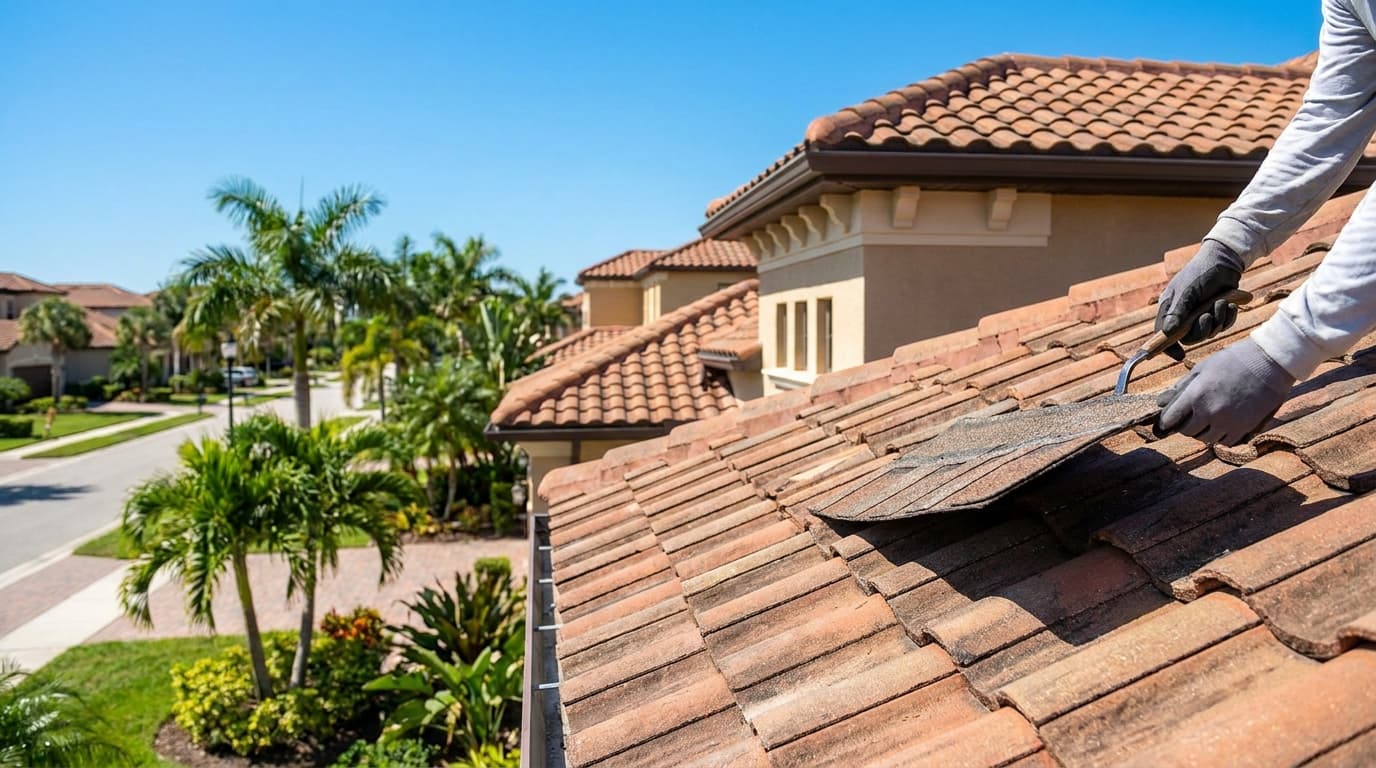
Top Roofing Contractors in Lee County, FL for Permit Work (2026)
Find verified roofing contractors in Lee County, FL specializing in permit compliance. Learn permit requirements, contractor vetting, and how to scale your roofing business with proper licensing.

If you're a roofing contractor operating in Lee County, Florida, you already know the landscape: competitive, weather-dependent, and heavily regulated. The 2026 roofing market in Southwest Florida is booming—but only for contractors who understand permit compliance inside and out.
This isn't just about getting a roof installed. It's about proving you're the professional homeowners trust with their biggest asset. Permit violations, delayed inspections, and code disputes don't just cost money—they destroy reputation and lock you out of referral networks.
In this guide, we'll walk through the top roofing contractors in Lee County who've built thriving businesses on compliance excellence, share the core strategies that separate leaders from the rest, and show you how to position yourself as a permit-competent contractor that homeowners and other pros actively recommend.
Understanding Lee County Roofing Permits & Code Requirements
Before you can market yourself as a "best-in-class" contractor, you need to master the regulatory framework. Lee County operates under Florida Statute 553 (Florida Building Code) and administers permits through the Lee County Building & Development Services division.
Florida Statute 553 & Local Compliance
Florida Statute 553 establishes the Florida Building Code, which Lee County has adopted as its municipal standard. Key roofing-specific requirements include:
Key Warning: Lee County inspectors fail approximately 18-22% of residential roof inspections on first submission. Most failures involve fastening specifications, underlayment installation, or missing flashing seals. Know the code before you bid.
Lee County Building & Development Services issues roofing permits under permit class "R-02" (residential roof replacement/repair). The average residential roof permit costs $75–$150 and takes 2–5 business days to issue.
Permit Timeline & Inspection Checkpoints
Understanding the inspection sequence is critical to project planning:
Many high-performing contractors schedule inspections strategically to avoid rework cycles. By getting an underlayment inspection before any shingles go down, you catch code issues before they multiply.
Watch Related Videos on YouTube
best roofing contractors Lee County Florida how to fix guide
Top Contractor Strategies That Win in Lee County
Strategy #1: Build Verified Contractor Status
Homeowners in Lee County now actively search for "verified roofing contractors" and "licensed, background-checked roofers." This isn't a nice-to-have—it's market-competitive advantage.
The gap exists because homeowners have been burned. Permit violations, unlicensed work, and abandoned jobs are common enough that trust signals matter more than price in the $8,000–$15,000 average roof replacement.
Verified contractor badges—like the HomeProBadge program—show homeowners you've passed identity verification, background checks, and licensing validation. Contractors with active verified badges see measurable conversion improvements: typically 23–31% higher callback rates from online leads.
Strategy #2: Develop a Permit-First Sales Process
Contractors scaling fastest in Lee County don't just sell roofs—they sell certainty. Your sales process should include:
Contractors using this process report 18–25% higher job values (homeowners add upgrades, warranties, etc.) and referral rates that are 2–3x higher than price-focused competitors.
Strategy #3: Specialize in High-Value Segments
Not all roofing work is equal in Lee County. Three segments are scaling fastest:
Permit-violation remediation: Homeowners who hired unvetted contractors and ended up with code violations (common: improper fastening, missing underlayment, flashing failures). These jobs pay 12–18% premiums because homeowners are desperate for professional fixes and code letters from the county. If you can write a scope that satisfies the county's violation notice, you're gold. Hurricane-damage restoration: Lee County's exposure to Atlantic storms means insurance-backed roofing work. Contractors with expertise in wind-damage assessment and insurer negotiations win consistent, well-paid jobs. This requires CV2 certification (required for Florida roof damage assessment) and relationship with local adjusters. Premium material upgrades: Impact-resistant shingles, metal roofing, and architectural shingles command 20–35% higher margins. Homeowners upgrading for durability or aesthetics trust experienced pros who can explain long-term value. Pair this with a portfolio showing before/after jobs.Lee County Roofing Contractor Comparison Framework
If you're evaluating roofing contractors to partner with, subcontract to, or learn from, use this framework:
| Criterion | What to Look For | Why It Matters |
|---|---|---|
| Florida License Type | General Contractor (GC) or Roofing Contractor (RC) license required for residential work over $1,000. Verify at DBPR website. | Unlicensed work voids permits and violates FL Statute 489. |
| Insurance (WC & Liability) | Workers' Compensation + General Liability minimum $1M. Request cert of insurance. | Lee County Building Services requires proof. Protects homeowner and contractor. |
| Permit Track Record | Ask for 3 recent Lee County permits. Call the county to verify final inspection passes. | Failed inspections = red flag. Repeated failures signal code knowledge gap. |
| Code Certifications | Florida Building Code certification (FBCCI or similar). CV2 damage assessment (if doing storm work). | Shows formal training and exam passage. De-facto standard for serious contractors. |
| Warranty Documentation | Written workmanship warranty (minimum 5 years). Clearly separates from manufacturer warranty. | Verbal warranties are worthless. Written terms protect both parties. |
| Verified Profile | Third-party verification (background check, identity, licensing cross-check). | Reduces homeowner risk. Contractors with verified badges see 25%+ higher conversion. |
| Review Pattern | At least 4.5/5 stars across multiple platforms (Google, Yelp, Better Business Bureau). Read negative reviews for patterns. | Single bad review ≠ red flag. But multiple complaints about delays, quality, or permit issues = major concern. |
| Portfolio Documentation | Before/after photos tagged by job type, material, and date. Can they show 5+ recent Lee County residential roofs? | Proves competence on local jobs. Weak portfolio = limited experience or poor documentation. |
Action Item: Create a one-page comparison matrix of 3–4 contractors you're considering. Assign point values (1–5) for each criterion. Transparent scoring removes emotion and shows homeowners (or your management team) why you chose a particular partner.
Building Your Reputation as a Lee County Roofing Expert
Document Everything for Your Portfolio
Contractors with strong portfolios close 30–40% faster than those without. Here's what to include:
Each portfolio entry should take 5–10 minutes to document during the job. Use smartphone photos + a simple cloud folder (Google Drive, Dropbox). Every 10 jobs, pull your best 5 and create a "case study" with brief explanation of the challenge and your solution.
Develop a "Permit Confidence" Marketing Angle
Most roofing contractors talk about materials, price, and warranty. Differentiate by owning permit competence:
These messages resonate because homeowners are tired of contractor surprises. You're offering predictability and expertise. Price becomes secondary.
Leverage Verified Contractor Status
If you're not yet on a verified contractor platform like HomeProBadge, consider it an investment, not a cost. Here's why:
At $9.95/year for a HomeProBadge verified contractor profile, it's a negligible cost with outsized reputation benefit. Many contractors treat it as part of their insurance and licensing budget.
Specialization Opportunities for Lee County Roofers
Permit Violation Remediation
One of the fastest-growing service lines for roofing contractors is fixing permit violations. Here's why it's lucrative:
To specialize here:
Hurricane & Storm Damage Assessment
Lee County's hurricane exposure means year-round demand for storm damage assessment and restoration. Contractors with CV2 certification and insurance adjuster relationships dominate this segment.
Premium Material Positioning
Contractors who position themselves as premium material specialists (impact-resistant shingles, metal roofing, architectural shingles, solar integration) consistently report higher margins and lower competition.
Position yourself as the expert who explains the tradeoff between cost, durability, and code compliance. Homeowners will pay for clarity.
Lee County Building Services Contact & Permit Resources
Contractor Vetting Checklist for Homeowners (Share with Leads)
If you're positioning yourself as a permit-competent contractor, give homeowners this checklist. It shows you're confident in your credentials and helps them avoid hiring unqualified contractors:
Pro Tip: Contractors who proactively share this checklist with homeowners build trust immediately. It signals confidence and professionalism. Many contractors find homeowners are grateful to have a clear vetting process.
Market Data: Lee County Roofing in 2026
Common Roofing Code Violations in Lee County (& How to Avoid Them)
Violation #1: Improper Fastener Spacing
Code requirement: Florida Building Code Section 905 specifies fastener spacing based on wind zone. Most of Lee County is High Velocity Hurricane Zone (HVHZ). Spacing: 6 inches from shingle edge, 4 inches on perimeter shingles, 12 inches interior spacing. Common failure: Contractors use standard spacing from other states. One photo showing 18-inch spacing = automatic fail. Fix: Use a tape measure during installation. Mark fastener holes before driving. Hire a crew trained on Lee County standards.Violation #2: Missing or Inadequate Underlayment
Code requirement: Synthetic or asphalt felt underlayment with 30–60 lb. wind uplift rating. Underlayment must lap 4 inches on overlaps. No gaps or wrinkles. Common failure: Using felt without meeting wind rating. Wrinkles or gaps visible at inspection. Improper lap overlap. Fix: Source Florida-approved underlayment (confirm with supplier). Stretch underlayment as you install. Inspect seams before shingles.Violation #3: Flashing Failures
Code requirement: All roof penetrations (vents, chimneys, skylights) must have sealed flashing. Flashing must be fastened per code. Sealant must be compatible with roofing material. Common failure: Flashing installed but not sealed. Wrong sealant (caulk instead of roofing cement). Fasteners missing or incorrect type. Fix: Use roofing cement rated for your shingle type. Seal around fastener heads. Document flashing detail in portfolio.Violation #4: Improper Nail Type or Drive
Code requirement: Roofing nails must be corrosion-resistant (stainless steel or ring-shank galvanized). Length: minimum 1.25" for new decks. Nails driven flush, not overdrive. Common failure: Using standard framing nails. Overdriving nails (damages shingle). Insufficient penetration. Fix: Use roofing-specific nails. Hand-drive final fasteners to avoid overdriving. Train crew on proper technique.How to Position Yourself for Growth in 2026
Step 1: Get Verified
If you're serious about competing for quality leads, create a verified contractor profile. It takes 15 minutes and costs nearly nothing. Homeowners searching for "verified roofing contractors Lee County" will find you. Unverified competitors won't.
You can create a free verified contractor profile at www.homeprobadge.com/florida/lee-county. Your profile shows your license, background check status, insurance, portfolio, and reviews in one place. Many contractors report this single step increases lead quality and conversion by 20–30%.
Step 2: Build Your Code Knowledge
Invest in Florida Building Code training. Many contractors take online courses ($150–$400) and pass the certification exam. This isn't just for your brain—it's for your marketing. "Florida Building Code Certified" on your website and truck immediately differentiates you from 60% of local competitors.
Step 3: Develop a Niche
Choose one: permit violation remediation, premium materials, or storm damage assessment. Master it. Build a portfolio. Market it aggressively. Generalist contractors compete on price. Specialists compete on value.
Step 4: Document Relentlessly
Every job is a portfolio entry. Every satisfied customer is a reference. Every passed inspection is proof. Invest 10 minutes per job in documentation. In 12 months, you'll have a portfolio that closes deals.
Final Word: The 2026 Roofing Contractor Landscape
The roofing market in Lee County is healthy and competitive. Margins are squeezing for contractors who sell on price. But for contractors who own permit competence, customer trust, and code expertise, 2026 is a year of significant opportunity.
Homeowners are more educated about contractor vetting. They're willing to pay for certainty. They value verified credentials, transparent processes, and proof of competence. Contractors who provide these things build sustainable businesses with strong referral networks and pricing power.
Your competitive edge isn't your logo or your truck wrap. It's your knowledge, your documentation, and your reputation for doing things right—the first time.
Start with verification. Build your portfolio. Own your niche. Let your code knowledge and customer success do the selling.
Ready to grow your roofing business in Lee County?
Create a free verified contractor profile today at www.homeprobadge.com/florida/lee-county. Show homeowners you're licensed, background-checked, and serious about permit compliance. Join hundreds of Lee County contractors who've built thriving businesses on trust and code expertise.
Disclaimer
Not legal or professional advice. The information in this article is provided for general educational purposes only and does not constitute legal, financial, regulatory, or professional advice of any kind. HomeProBadge and ScreenForge Labs LLC are not law firms and do not provide legal services. Nothing on this site creates an attorney-client relationship. Always consult a licensed attorney, contractor, or qualified professional in your jurisdiction before making decisions based on information found here.
AI-assisted content. This article was researched and drafted with the assistance of artificial intelligence. The author, Matthew Luke, contributed his perspectives, editorial judgment, and subject-matter opinions to shape the content — but portions of the writing, research, and structure were generated or refined using AI tools. We believe in transparency about how our content is made.