
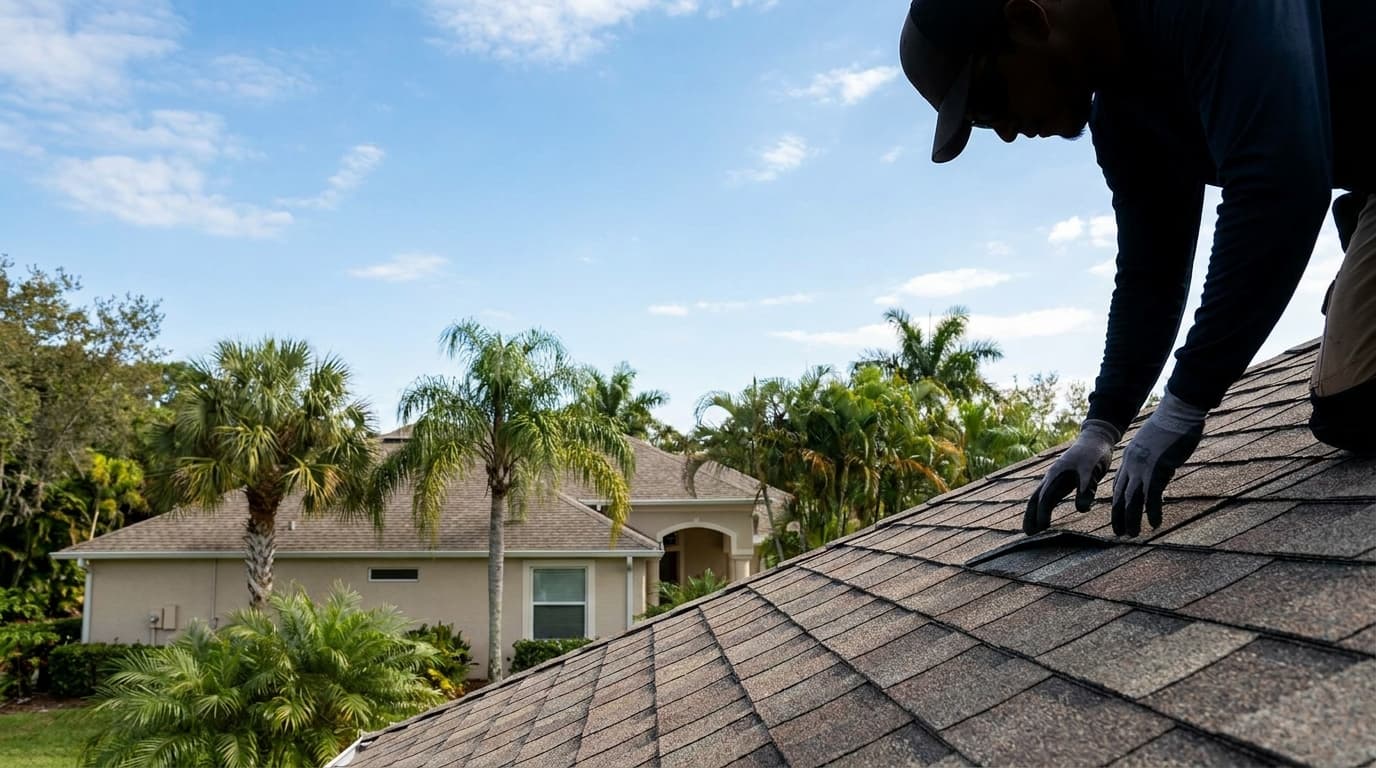
Top Roofing Contractors in Miami-Dade County, FL for Permit Work (2026)
Find verified roofing contractors in Miami-Dade County specializing in permit compliance. Learn permit requirements, contractor vetting strategies, and how to scale your roofing business.
If you're a roofing professional operating in Miami-Dade County, you already know that permit work is non-negotiable—and increasingly, it's a competitive advantage. Homeowners are more informed than ever about code compliance, permit violations can tank property sales, and county inspectors are auditing residential roofing more aggressively. The contractors who position themselves as permit-savvy specialists don't just win jobs; they build client loyalty and command premium pricing. This guide is designed for roofing pros who want to understand the landscape of permit compliance work in Miami-Dade County, identify opportunities to specialize, and learn how to market their expertise to homeowners who desperately need a trusted, verified partner.
Understanding Miami-Dade County Roofing Permits: The Business Case for Specialization
Miami-Dade County operates under Florida Statute 553 (Florida Building Code) and the Miami-Dade County Building Code, which incorporates stricter hurricane and wind resistance standards than most counties in the state. This matters to you as a contractor because it creates a legitimate barrier to entry for unpermitted or sloppy work. Homeowners who ignored permit requirements five years ago are now facing code violations during refinances, roof inspections, or insurance underwriting. They need contractors who understand not just roofing installation, but the permit landscape and remediation pathways.
The permit work market in Miami-Dade County breaks down into three primary segments:
New residential construction roofing — new homes, additions, re-roofing projects where permits are obtained upfront. Standard timeline: 10–20 business days for permit issuance. Revenue potential: high margins, steady workflow.
Permit remediation and violation correction — fixing unpermitted or non-compliant roofs, addressing wind mitigation gaps, updating installations to current code. Timeline: 15–30 days (permit timelines vary by violation severity). Revenue potential: premium rates, repeat business, referrals.
Hurricane damage and insurance-driven work — post-storm roof repairs and replacements where permits and inspections are mandatory. Timeline: accelerated, often 5–10 days per permit. Revenue potential: high volume, seasonal peaks, urgent client needs.
Warning: Operating without proper permits in Miami-Dade County exposes you to stop-work orders, fines of $100–$5,000+ per violation, license suspension, and civil liability. One unpermitted job can unravel your reputation and referral network in a county where word travels fast.
Specializing in permit-compliant work positions you to capture clients who actively value regulatory safety—and who will pay for it. This segment typically spends 15–25% more than DIY-attracted discount shops.
Watch Related Videos on YouTube
best roofing contractors Miami-Dade County Florida how to fix guide
Key Roofing Permit Requirements in Miami-Dade County
Before you market yourself as a permit specialist, you must operate within the regulatory framework. Here's what Miami-Dade County requires:
Building Permit Triggers
Under Florida Statute 553.775 and Miami-Dade County Code, a building permit is required for:
Pro Tip: Many homeowners and even some contractors misclassify minor repairs as "maintenance" to avoid permitting. Be the contractor who educates clients upfront about permit triggers. This builds trust and creates a moat around your reputation.
Required Documentation and Inspections
Miami-Dade County Building Department requires:
- Material type and rating.
- Wind resistance classification (e.g., Class D or higher for Miami-Dade).
- Attachment methods and spacing (nail/screw patterns).
- Underlayment type and fastener specifications.
- Edge metal and flashing details.
Permit fees typically range from $150–$400 depending on roof area and project scope. Processing time: 5–15 business days during standard periods; accelerated permitting available for expedited projects (add 50% fee premium).
Wind Mitigation and Hurricane-Resistant Standards
Miami-Dade County sits in a high-risk hurricane zone. Roofs must meet ASTM D3019 (asphalt shingles) and include:
Homeowners installing new roofs or remediating violations must often upgrade to these standards, creating an upsell opportunity for wind mitigation packages.
How to Position Yourself as a Permit-Compliant Roofing Specialist
Differentiating from competitors in Miami-Dade County means building credibility around permit expertise. Here's how top performers do it:
Build a Permit-Focused Reputation System
The best roofing contractors in Miami-Dade County don't just install roofs—they document their compliance rigorously. This means:
A verified contractor directory like HomeProBadge allows you to aggregate these wins into a searchable profile that homeowners actively seek out. When a homeowner searches "roofing contractors Miami-Dade County" and filters by "permit expertise" and "verified background-checked," you want to be the name they find.
Become Fluent in Miami-Dade's Permit Workflow
Elite permit specialists know:
- Inadequate fastener spacing (most common rejection).
- Improper flashing at eaves and rakes.
- Substandard underlayment (Tyvek vs. asphalt-saturated felt — they prefer synthetic).
- Missing or improperly installed wind clips.
Invest in Training and Certifications
The contractors capturing the highest-margin permit work typically hold:
These credentials cost $200–$1,500 each but command 20–30% premium pricing from informed homeowners.
Comparison Table: Roofing Permit Work Models in Miami-Dade County
| Model | Target Client | Avg. Project Cost | Permit Timeline | Competitive Advantage | Scalability |
|-----------|------------------|----------------------|---------------------|--------------------------|----------|
| New Construction | Builders, developers, new homes | $8,000–$25,000 | 10–15 days | Volume, long-term partnerships | High (residential developer pipeline) |
| Permit Remediation | Homeowners facing violations, refinances, insurance audits | $6,000–$18,000 | 15–30 days | Specialist knowledge, trust, premium margins | Medium (referral-dependent, high LTV) |
| Hurricane Damage | Insurance claim holders, post-storm | $5,000–$20,000 | 5–10 days (expedited) | Speed, emergency responsiveness, claim expertise | Very high (seasonal, high demand) |
| Wind Mitigation Upgrades | Existing homeowners, insurance-premium reduction | $3,000–$10,000 | 7–14 days | Education, cost-benefit clarity, premium positioning | Medium (add-on to re-roof jobs) |
| Discount/Unpermitted | Price-sensitive DIYers, cash-pay | $2,000–$6,000 | None (unpermitted) | Low pricing only | Medium (high churn, liability risk) |
Critical Insight: The unpermitted/discount model might seem faster and higher-margin, but it's a trap. One violation complaint, one insurance claim denial, one refinance audit, and your customer base evaporates. Permit-compliant specialists build sustainable, referral-driven businesses. They earn more per job and sleep better at night.
Best Practices for Winning Permit Work in Miami-Dade County
1. Educate Homeowners on Permit Value
Most homeowners don't want to get permits—they want lower prices and faster installation. Your job is to reframe permits as risk mitigation.
When a homeowner asks, "Can you just skip the permit?" your response should be educational and empathetic:
*"I get it—permits add 2–3 weeks and maybe $200–$400 in fees. But here's what happens if we skip it: your homeowner's insurance might deny a claim if they discover the unpermitted roof. When you refinance or sell, the buyer's lender will order an inspection and find the violation. You'll have to hire someone to 'fix' an already-fixed roof or discount your sale price by 5–10%. Or you can spend $300 now to get a certificate of completion and never worry about it again. What makes sense to you?"
This positions you as the smart, trustworthy choice—not the cheap one.
2. Develop a Homeowner Permit Guidance Package
Offer a free "Permit Roadmap" document that outlines:
HomeProBadge's AI-powered permit violation action plans are exactly this kind of resource. Use it as a lead magnet. Homeowners download it, see your professionalism, and call you for a quote.
3. Build Relationships with Miami-Dade Building Department Staff
The inspectors and plan reviewers process hundreds of roofing permits annually. They know which contractors consistently submit correct documentation and which ones don't.
Doing so shaves weeks off permitting timelines and builds goodwill that pays dividends in busy seasons.
4. Create Case Studies for Common Violation Scenarios
Publish before/after case studies addressing the most common permit issues homeowners face:
Each case study should include cost ranges, timeline breakdowns, and testimonials. Post them on your website, social media, and in your HomeProBadge contractor profile.
5. Coordinate with Insurance Agents and Lenders
Insurance agents and mortgage lenders refer roofing work when clients need to address code violations, wind mitigation gaps, or claim-related repairs. Build relationships with 5–10 key referral sources in your area:
These relationships often produce the highest-quality, pre-qualified leads in the roofing business.
Common Permit Violations in Miami-Dade County and How to Capitalize
Violation #1: Improper Fastener Installation
What it is: Nails or screws spaced too far apart, driven at wrong angles, or using wrong fastener types.
Why it happens: Contractors rushing to reduce labor costs, using outdated installation manuals, or lack of awareness.
How to address it: Specify exact fastener patterns on your quotes. Use photo documentation during installation. Train your crews on the nail-per-shingle requirement (typically 6 in high-wind zones vs. 4 in standard zones).
Revenue opportunity: Retrofit jobs to correct fastener patterns often add $1,000–$3,000 in remediation work.
Violation #2: Inadequate Underlayment
What it is: Using tar-paper or low-quality underlayment instead of synthetic underlayment; improper sealing at valleys and eaves.
Why it happens: Cost-cutting; code amendments favor synthetic underlayment, but many older installations used asphalt-saturated felt.
How to address it: Specify synthetic underlayment (GAF Timberline HD, CertainTeed StormGuard) on all permits. Educate homeowners that 50-year synthetic underlayment is worth the $200–$400 premium because it increases roof lifespan and insurance ratings.
Revenue opportunity: Underlayment upgrades are often bundled into re-roofing jobs and boost margins by 10–15%.
Violation #3: Missing or Non-Compliant Flashing
What it is: Gaps or improper fastening around chimneys, vents, skylights, gutters, and roof penetrations.
Why it happens: Water intrusion here is the #1 cause of roof failure. Many contractor-installed flashings don't meet Miami-Dade's high-wind standards.
How to address it: Use manufacturer-approved flashing kits and mechanically fasten all seams (not just sealant). Pre-stage flashing inspection before finalizing the roof deck.
Revenue opportunity: Flashing-only retrofit jobs can run $2,000–$6,000 and position you as a leak-prevention specialist.
Violation #4: Inadequate Hurricane Tie-Downs
What it is: Missing or improperly installed roof-to-rafter, rafter-to-wall connections. Miami-Dade County frequently requires these on homes built pre-2000.
Why it happens: Older homes weren't built to current wind standards. Homeowners don't realize they're required until insurance underwriting or a code violation surfaces.
How to address it: Include hurricane tie inspection and recommendations in every roof estimate. Offer a "Wind Mitigation Package" bundling tie installations with roof work.
Revenue opportunity: Wind mitigation tie installations add $1,500–$4,000 per job and often unlock homeowner's insurance discounts of 10–15%, creating a strong value narrative.
Marketing Your Permit-Compliant Expertise
Educational Content Strategy
Roofing professionals who write and share educational content about permit requirements outrank competitors in search results and homeowner perception. Focus on:
Verified Contractor Credibility
Homeowners increasingly trust third-party verification over contractor self-claims. Being listed on a verified directory like HomeProBadge—where you've undergone identity verification and background screening—instantly elevates your credibility. Create a complete profile with:
When a homeowner searches "permit-compliant roofing contractors Miami-Dade County," they'll find you—verified, vetted, and positioned as a specialist.
Leverage Permit Data in Your Marketing
Publish your company's permit statistics:
These claims (backed by documentation) differentiate you sharply from competitors who don't track or publicize this data.
Resources and Tools for Permit Specialists
Miami-Dade County Building Department Resources
Industry Standards and Certifications
Business and Reputation Tools
The Competitive Edge: Specialization Pays Off
The roofing market in Miami-Dade County is fragmented. You have discount operators, fly-by-night crews, and a small segment of permit specialists who are fully booked. Homeowners actively searching for "permit-compliant roofing contractors" are pre-qualified: they understand the value, they're willing to pay, and they want to work with a professional who eliminates risk.
By positioning yourself as a permit specialist—documenting your compliance record, publishing case studies, and listing on verified contractor directories—you shift from competing on price to competing on expertise and peace of mind. This model supports 20–30% higher margins, better customer retention, and a sustainable referral pipeline.
The contractors capturing the most permit work in Miami-Dade County in 2026 won't be the cheapest. They'll be the most credible, most transparent, and most visible to homeowners who actively need them.
Next Steps: Build Your Permit-Specialist Profile
If you're ready to scale your roofing business by specializing in permit compliance work, start here:
The permit-specialist market is growing as homeowners become more educated and regulators more aggressive. Position yourself to lead it.