
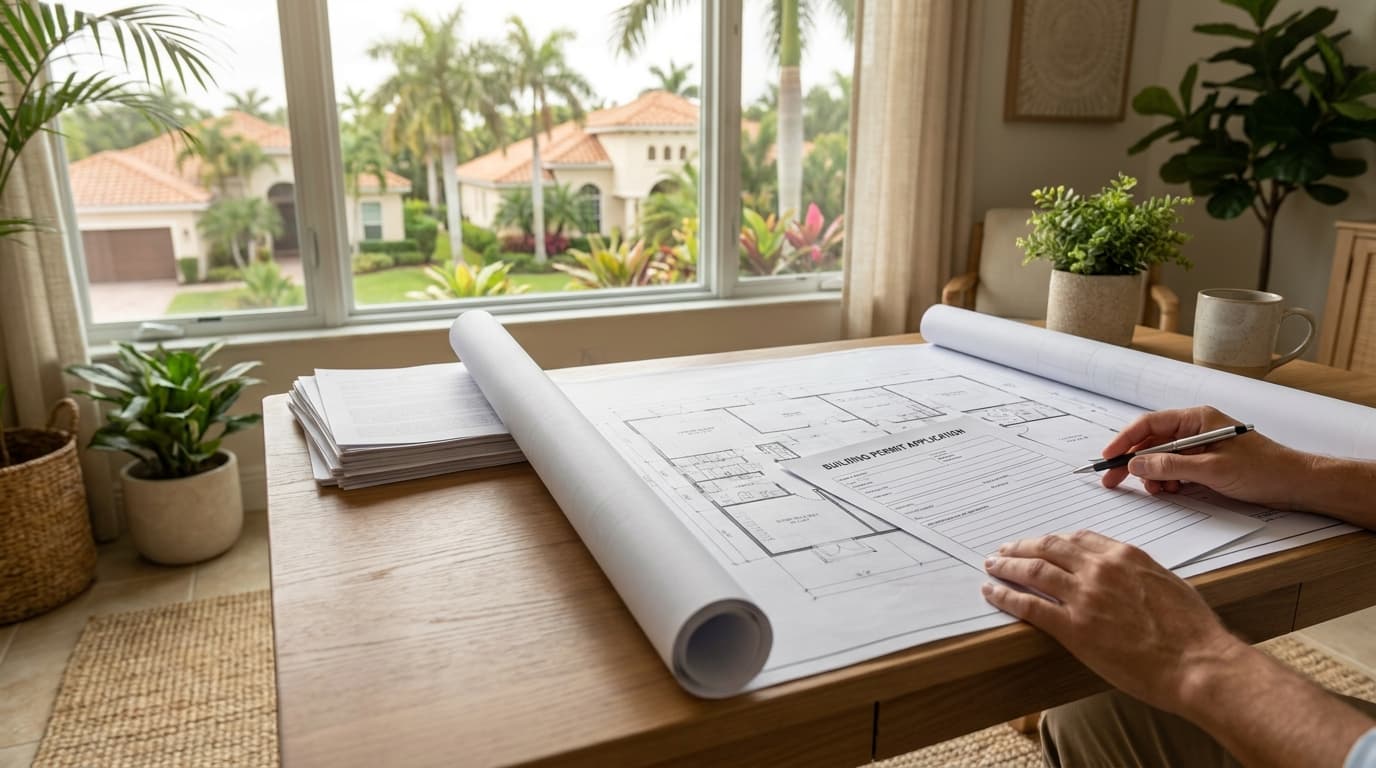
Understanding Polk County Building Permits: A Florida Homeowner's Complete Guide
Learn how Polk County building permits work, what triggers code enforcement, and how to resolve violations. Step-by-step guide for Florida homeowners.

If you've received a code enforcement notice in Polk County, Florida—or you suspect your home has unpermitted work—you're likely feeling a mix of anxiety and confusion right now. Building permits, code violations, and the county inspection process can feel like navigating a foreign country with its own language and rules.
The good news: you're not alone, and this isn't insurmountable. Thousands of Polk County homeowners face similar situations every year. Whether your contractor pulled permits for your kitchen remodel without telling you, or you discovered the previous owner never permitted that addition, there's a clear path forward.
This guide walks you through everything you need to know about Polk County building permits—what they are, why they matter, what triggers violations, and most importantly, how to fix the problem. By the end, you'll understand your options and have a concrete action plan.
Quick Summary
What you need to know right now:What Is a Polk County Building Permit?
A building permit is a document issued by Polk County that authorizes construction, renovation, or installation work on your property. It's not optional—it's a legal requirement under Florida Statute 553, which governs all building construction activities in the state.
When a contractor (or homeowner doing DIY work) pulls a permit, they're essentially saying: "I'm going to follow Florida Building Code standards, and I agree to inspections at key stages to ensure the work is safe and compliant."
Why Polk County Requires Permits
Permits exist for one core reason: public safety and property protection. Here's what the process actually accomplishes:
Without permits, none of this happens. Work gets done to unknown standards, inspections never occur, and problems only emerge years later—often during a home sale or insurance claim.
Types of Work Requiring Polk County Permits
Not every home project needs a permit. Small repairs and maintenance don't. But most construction, renovation, and installation work does. Here's what typically requires a permit in Polk County:
| Work Type | Permit Required | Notes |
|---|---|---|
| New construction (house, garage, shed) | Yes | Always requires permits |
| Roof replacement | Yes | Structural component |
| Room addition | Yes | Structural and electrical/plumbing |
| Kitchen/bathroom remodel | Yes | If electrical, plumbing, or structural work involved |
| Electrical work (rewiring, new circuits) | Yes | Always requires electrical permit |
| Plumbing work (new lines, fixtures) | Yes | Always requires plumbing permit |
| HVAC installation or replacement | Yes | Requires mechanical permit |
| Pool/spa installation | Yes | Separate permit required |
| Fence installation | Maybe | Check local zoning; may require permit |
| Deck/patio | Yes | If elevated or permanent structure |
| Driveway/foundation work | Yes | Structural |
| Interior paint/flooring | No | Generally considered maintenance |
| Cabinet replacement | No | Unless electrical/plumbing involved |
| Window replacement | Depends | Check with county; some require permits |
Watch Related Videos on YouTube
Polk County Florida building permits homeowner guide how to fix guide
How the Polk County Permit Process Works
Understanding the actual workflow helps demystify the process. Here's how a permitted project progresses in Polk County:
Step 1: Application & Submission
Your contractor (or you, if doing the work yourself) submits a permit application to Polk County Building & Development Services. The application includes:
Step 2: Plan Review
County staff reviews the application to ensure it complies with:
This can take 3–10 business days depending on complexity. If there are issues, the county issues a "Request for Information" (RFI), and the contractor must revise and resubmit.
Step 3: Permit Issuance
Once approved, the permit is issued. The contractor displays the permit at the job site and receives a copy. This is your documentation that the work is authorized.
Step 4: Inspections During Work
As work progresses, county inspectors visit at required checkpoints:
The contractor schedules inspections. If work doesn't pass, the contractor must fix it and request re-inspection.
Step 5: Certificate of Completion
Once the final inspection passes, Polk County issues a Certificate of Completion (also called Certificate of Occupancy or C.O.). This official document proves the work was completed to code.
Why This Matters: You need the C.O. to resell your home, refinance, or make an insurance claim. Without it, you're admitting the work was never permitted or never completed properly.
What Is a Code Enforcement Notice?
If Polk County discovers work that was done without a permit—or permitted work that wasn't completed properly—you may receive a Code Enforcement Notice. This is the formal document that triggers your obligation to respond.
How Code Violations Are Discovered
Polk County identifies unpermitted work through several channels:
What the Notice Says
A Code Enforcement Notice typically includes:
The Penalty for Ignoring It
Do not ignore a Code Enforcement Notice. Ignoring it leads to escalating consequences: daily fines (often $100–$500/day), liens on your property, loss of utility service, or legal prosecution. The cost of handling it immediately is always cheaper than the cost of ignoring it.
Why Unpermitted Work Is a Problem
You might be wondering: "If the work was done well and the contractor knows what they're doing, does it really matter?" The answer is absolutely yes—and here's why:
1. Insurance Won't Pay for Unpermitted Work
If a fire, storm, or accident damages unpermitted work, your homeowner's insurance will likely deny your claim. Why? Because the work violates the terms of your insurance policy. You could lose tens of thousands of dollars.
2. Home Resale Complications
When selling your home, title companies and lenders will discover unpermitted work during their review. Most require you to either:
These discoveries often happen during closing, after you've accepted an offer.
3. Financing & Refinancing Issues
If you want to refinance or take out a home equity loan, lenders will uncover the violations. Many will refuse to finance until resolved.
4. Property Value Impact
Unpermitted work reduces your home's appraisal value. An addition built without permits might add $0 to your home's value—even if it cost $50,000 to build.
5. Liability & Safety Concerns
Without inspections, no one verified that electrical work is safe, plumbing is code-compliant, or structural integrity is sound. A faulty electrical installation could cause a fire. Improper plumbing could lead to sewage backup. These aren't theoretical risks.
6. HOA & Title Issues
If your property is in an HOA community, unpermitted work violates covenant restrictions. The HOA can impose fines or require removal of the work.
Florida Statute 553 & Your Rights
Florida Statute 553 is the state law governing building construction. Key points for homeowners:
What the Statute Requires
Under Florida Statute 553.791, "no person shall perform work on a building unless properly licensed and unless a valid permit has been issued." This applies whether you hire a contractor or do DIY work yourself.
Your Recourse for Unpermitted Work by a Contractor
If a contractor performed work without pulling required permits, you have legal recourse:
Contractor Licensing Requirements
Contractors performing work in Polk County must hold valid licenses:
Always verify contractor licensing before work begins. You can check licenses at MyFloridaLicense.com or by calling DBPR. Unlicensed contractors performing permitted work is a criminal offense.
How to Resolve Polk County Permit Violations
If you've received a Code Enforcement Notice, you have options. The path forward depends on your specific situation, but here are the most common resolution strategies:
Option 1: Obtain a Retroactive Permit
If the work is still present and salvageable, you can apply for a retroactive permit (also called a "permit after construction").
How it works:Option 2: Obtain a Licensed Engineer Certification
For structural work, HVAC, or electrical systems, you can hire a Professional Engineer (PE) licensed in Florida to inspect and certify that the work meets code.
How it works:Option 3: Correct or Remove the Work
If the work is problematic or doesn't meet code, Polk County may require you to either correct it or remove it entirely.
How it works:Option 4: Negotiated Settlement or Variance
In some cases, if compliance is extremely costly or infeasible, you may petition Polk County for a variance or non-conforming use approval. This is a formal request to allow work that doesn't fully comply with code.
Important: This is rare and requires legal grounds. Most code violations cannot be waived.Option 5: Appeal
If you believe the violation citation is erroneous or the enforcement action is unjust, you have the right to appeal to Polk County's Code Enforcement Board.
Polk County Building & Development Services Contact Information
When you're ready to address a violation, here's where to go:
Polk County Building & Development ServicesYou can:
Most staff are helpful and understand that many homeowners are dealing with this for the first time. Don't hesitate to call.
Financial Implications: Costs & Fines
Understanding the financial exposure helps you prioritize addressing the violation.
Code Enforcement Fines
Daily fines for unpermitted work typically range from $100–$500 per day, depending on the type of violation. If you ignore a notice for 6 months, you could accumulate $18,000–$90,000 in fines.
Fines accrue until the violation is resolved.
Permit Fees
Retroactive permit fees are calculated based on the valuation of the work:
Fees vary by project type and complexity.
Inspection & Correction Costs
If inspections reveal code violations, you'll need to hire a contractor to correct them. This cost is unpredictable and depends on what's found. It could be $500 (re-electrical a outlet) or $15,000 (structural reinforcement).
Professional Services
Impact on Home Value
Unpermitted work can reduce your home's value by 5–20% depending on the scope and nature of the violation.
How HomeProBadge Can Help
Navigating Polk County permit violations is complex, and mistakes can be costly. This is where HomeProBadge comes in.
Permit Violation Action Plans
At HomeProBadge, we've created county-specific permit violation action plans designed specifically for Florida homeowners. Here's what you get:
Instead of feeling lost and making costly mistakes, you'll have a clear, county-specific plan within minutes.
Verified Contractor Directory
When you need a licensed contractor to perform corrections or pull a retroactive permit, our directory connects you with identity-verified and background-checked professionals in Polk County. You can filter by:
Every contractor on HomeProBadge has passed verification—you're not guessing about credentials.
Identity-Verified HomeProBadge
If you're a home service professional reading this, the HomeProBadge ($9.95/year, annually re-verified) demonstrates to homeowners and customers that you're legitimate, properly vetted, and serious about compliance. It appears on your HomeProBadge profile and in contractor searches—a trust marker in an industry where trust is everything.
Common Polk County Permit Violations
Based on patterns in Polk County Code Enforcement, here are the most frequent violations homeowners face:
Electrical Work Without Permit
What happens: Homeowner or unlicensed contractor adds circuits, installs outlets, or rewires areas without pulling an electrical permit. Why it matters: Faulty electrical work is a fire hazard. Code inspectors verify wire gauge, breaker sizing, grounding, and safety devices. How to fix: Obtain retroactive electrical permit, pass inspection, or hire PE to certify compliance.Unpermitted Room Additions
What happens: A previous homeowner added a room, porch, or enclosed garage without permits. Why it matters: Structural integrity, building setbacks, zoning compliance, and utility capacity all depend on permitted plans. How to fix: Retroactive permit is complex for additions. Often requires engineer certification or structural corrections.Plumbing Work Without Permit
What happens: DIY homeowner or unlicensed contractor adds bathroom fixtures, replumbs kitchen, or modifies drainage. Why it matters: Improper plumbing leads to sewage backup, contamination, or system failures. How to fix: Retroactive plumbing permit and inspection.Pool/Spa Installation Without Permit
What happens: Above-ground or in-ground pool installed without permit. Setback requirements are frequently violated. Why it matters: Pools must meet safety code (fencing, drains, electrical) and zoning (property line distance). How to fix: If setback violation, may need variance or relocation. Otherwise, retroactive permit.Roof Replacement Without Permit
What happens: Roof replaced without pulling permit or without proper inspection. Why it matters: Structural integrity; improper installation leads to leaks, wind damage, or collapse. How to fix: Retroactive permit. Some counties may require recertification by roofing contractor.Unpermitted Structural Work
What happens: Load-bearing walls removed, foundation work, or major structural modifications done without permit. Why it matters: Structural failures can cause collapse or injury. This is the most serious violation type. How to fix: Engineer certification strongly preferred. May require extensive corrections.Timeline: What to Expect
Understanding the realistic timeline helps you plan financially and mentally.
Week 1:Getting Started: Your Next Steps
You now understand what Polk County permits are, why they matter, and how violations happen. Here's your action plan:
Immediate (This Week)
Short Term (This Month)
- Retroactive permit (most comprehensive, but more involved)
- Engineer certification (faster, good for structural work)
- Correction/removal (if required)
Medium Term (Next 2–3 Months)
Long Term
Final Thoughts
Receiving a Code Enforcement Notice is stressful, but it's not a disaster. Thousands of Polk County homeowners resolve violations every year. The cost of action is always less than the cost of inaction.
The worst thing you can do is ignore the notice. The best thing you can do is take action immediately, get expert guidance, and follow a clear plan.
Polk County staff are generally reasonable and willing to work with homeowners who engage proactively. They understand that people inherit problems (from previous owners) or make mistakes. What matters is fixing it.
You've got this. Use the resources available—Polk County Building & Development Services, HomeProBadge for your action plan, and verified contractors. You'll move from confusion and worry to resolution.
Get Your Polk County Permit Violation Action Plan
Ready for a step-by-step roadmap specific to your situation?At HomeProBadge, we've created AI-generated, county-specific Permit Violation Action Plans for Florida homeowners dealing with code enforcement. You'll get:
✓ Exact next steps in the right order
✓ Timeline for each phase
✓ Cost estimates
✓ Verified contractor recommendations in Polk County
✓ Document templates
✓ Your personalized resolution strategy
Visit homeprobadge.com to generate your action plan in minutes. You'll walk out with clarity, confidence, and a concrete path forward.If you're a contractor or home service professional in Polk County, consider getting your HomeProBadge identity verification ($9.95/year, annually re-verified). It signals to homeowners and customers that you're legitimate, vetted, and serious about doing work the right way.
Additional Resources
Disclaimer
Not legal or professional advice. The information in this article is provided for general educational purposes only and does not constitute legal, financial, regulatory, or professional advice of any kind. HomeProBadge and ScreenForge Labs LLC are not law firms and do not provide legal services. Nothing on this site creates an attorney-client relationship. Always consult a licensed attorney, contractor, or qualified professional in your jurisdiction before making decisions based on information found here.
AI-assisted content. This article was researched and drafted with the assistance of artificial intelligence. The author, Matthew Luke, contributed his perspectives, editorial judgment, and subject-matter opinions to shape the content — but portions of the writing, research, and structure were generated or refined using AI tools. We believe in transparency about how our content is made.